
Why Modern Merchants Are Ditching Fragile Crypto Payment APIs
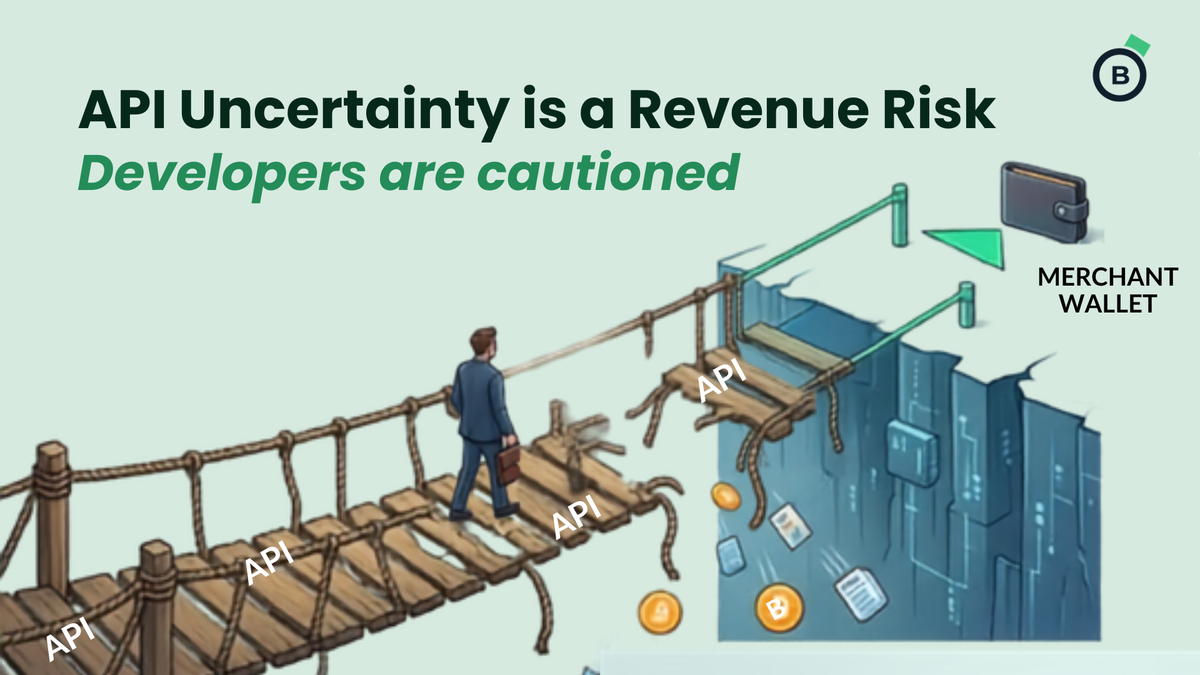
For online businesses, accepting digital currency is an essential strategy for expanding globally, reducing settlement overhead, and eliminating chargebacks. However, as crypto adoption accelerates, engineering teams face a recurring operational nightmare: fragile crypto payment APIs that prioritize internal feature rollouts over backend stability.
When a payment processor modifies endpoint parameters or schema structures without warning, critical revenue automation comes to a sudden halt. The core issue extends beyond custodial risk—it stems from third-party payment gateways treating merchant API integrations as volatile internal software rather than immutable infrastructure.
The Operational Danger of Undocumented API Breakage
When a crypto payment processor modifies its production environment without API versioning, deprecation windows, or regression testing, the fallout impacts development velocity and financial tracking.
Consider a real-world scenario recently reported on Trustpilot: an online merchant using a prominent custodial crypto gateway experienced a sudden removal of the unique_external_id parameter from their payout API. This followed a previous unannounced modification that had already disrupted their fiat_amount processing. The immediate operational impact included:
- Broken Payout Automation: Automated reconciliation scripts failed instantly, forcing the merchant’s accounting team into manual, error-prone data entries.
- Out-of-Sync Documentation: Official developer documentation continued displaying the removed parameter as active, leaving engineers troubleshooting ghost errors.
- Support Friction: Initial support responses suggested updating documentation to reflect the broken state rather than restoring missing fields, leaving business operations stalled.
These operational bottlenecks demonstrate what happens when payment platforms view developer APIs as internal utility scripts rather than strict contracts.
Key Risks inherent in Generic Crypto Payment APIs
Integrating with processors that lack developer-first API governance exposes businesses to three major vulnerabilities:
- Unannounced Breaking Changes: Removing response attributes, altering parameter names, or modifying webhook structures without version control causes silent production failures.
- Custodial Bottlenecks & Frozen Assets: Centralized intermediaries hold merchant funds in omnibus accounts, enforcing arbitrary withdrawal thresholds or locking funds in high-risk categories (like subscriptions or digital goods).
- Desynchronized API Docs & Stale Callbacks: Outdated API specifications and delayed Webhook notifications leave backend systems unable to confirm transaction finality accurately.
The Blockonomics Solution: Developer-First API Standards
Blockonomics is architected specifically to eliminate integration volatility. Beyond payment processing, the platform delivers reliable developer infrastructure designed for predictable operations and financial sovereignty.
Here is the Blockonomics promise to engineering teams:
1. Immutable API Governance & Predictable Endpoints
The Blockonomics Payment API enforces strict endpoint stability, consistent request schemas, and predictable callback structures. Crucial parameters—from order identifiers down to transaction hashes—are maintained with strict backward compatibility. Automated payout and reconciliation scripts remain stable without unexpected breakages.
2. Non-Custodial Direct-to-Wallet Architecture
Operating on a direct-to-wallet model, Blockonomics routes customer payments directly into your private wallet. Because funds bypass third-party middleman accounts, merchants experience zero withdrawal delays, no minimum payout thresholds, and immunity from account freezes. While non-custodial setups require standard treasury management, Blockonomics simplifies this by pairing direct-to-wallet security with seamless e-commerce plugin integrations (like WooCommerce and Shopify), giving merchants full fund control without complex infrastructure overhead.
3. Real-Time HTTP Webhooks & Payment Callbacks
Blockonomics delivers real-time HTTP callbacks directly to merchant servers as soon as transactions broadcast to the blockchain network. Dedicated monitoring endpoints provide instant visibility into confirmation states, giving you total control over order fulfillment workflows.
Frequently Asked Questions (FAQ)
What is a non-custodial crypto payment API?
A non-custodial crypto payment API processes transactions directly between customer wallets and merchant-owned wallets without holding merchant funds on a centralized platform.
Why do API breaking changes occur in payment gateways?
Breaking changes occur when gateways alter API response parameters, database schemas, or authentication headers in production environments without maintaining backward compatibility or providing versioned endpoints.
How does Blockonomics ensure API stability for developers?Blockonomics utilizes static callback structures, strict endpoint versioning, and direct wallet routing to guarantee that reconciliation scripts and automated e-commerce plugins continue operating seamlessly.
Build Your Checkout on Reliable Infrastructure
A payment gateway forms the core foundation of digital commerce revenue. Rather than risking unexpected integration failures, broken callback routines, or frozen funds with volatile platforms, partner with an established, non-custodial provider engineered specifically for developer reliability.
Explore the Blockonomics Developer Documentation to deploy a stable, direct-to-wallet crypto checkout today.
Comments ()