The Ultimate Guide to Bitcoin Payment APIs in 2026: A Comprehensive Comparison for Merchants
Introduction: The Crypto Payment Revolution Is Here
Digital wallets now account for more than half of global online transaction volume and one-third of offline transactions, with cryptocurrencies projected to be the fastest-growing online payment method at a compound annual growth rate (CAGR) of 16% between 2025 and 2030. By 2030, crypto e-commerce transaction value is expected to reach $310 billion globally. Yet, remarkably, only 10% of merchants worldwide accept cryptocurrency payments directly, and crypto represented just 0.19% of global e-commerce transactions in 2025.
This gap represents one of the most significant opportunities in modern commerce. The infrastructure exists. The consumer demand is real. What merchants need is the right payment API partner—one that combines security, flexibility, global reach, and true ownership of funds.
This comprehensive guide examines the top Bitcoin payment APIs available as of May 2026. We will compare them across every dimension that matters to merchants: supported currencies, fee structures, custody models, developer experience, integration tools, privacy features, and settlement options. Throughout this analysis, we will demonstrate why Blockonomics has emerged as the premier choice for businesses that demand both control and simplicity—supporting over 150 fiat currencies, offering a complete suite of merchant tools, and providing a holistic multicoin ecosystem that is genuinely best-in-market.
The crypto payment gateway market was valued at approximately $2.02 billion in 2025, growing at 19.5% annually. The Bitcoin payment ecosystem alone is projected to grow from $1.8 billion in 2025 to $8.9 billion by 2034. This growth trajectory underscores a fundamental truth: businesses that integrate crypto payments today are positioning themselves at the forefront of a multi-decade transformation in global commerce.
The Architecture of Trust: What Makes a Great Bitcoin Payment API
Before comparing individual platforms, we must establish the criteria that separate exceptional payment APIs from merely adequate ones. A Bitcoin payment API is not simply a conduit for transactions—it is the financial backbone of a merchant's relationship with their customers. The right choice impacts revenue, operational efficiency, legal exposure, and long-term business resilience.
Custody Model: Who Holds the Keys?
The most fundamental architectural decision in crypto payment processing is the custody model. Custodial platforms hold merchant funds in their own wallets, creating counterparty risk: the processor could be hacked, become insolvent, freeze accounts, or impose withdrawal restrictions. Non-custodial platforms route payments directly to the merchant's wallet, eliminating this risk entirely. This distinction is not theoretical. The collapses of major crypto platforms in recent years have demonstrated that custodial risk is real and potentially catastrophic for businesses that rely on these processors for daily revenue.
Blockonomics was built non-custodial from day one. Enables merchants to accept payments directly into their wallets without intermediaries. When a customer pays via Blockonomics, funds travel directly from the customer's wallet to the merchant's wallet—they never sit in a Blockonomics-controlled account.
Privacy Architecture
Crypto's public ledger creates unique privacy challenges for merchants. Publicly visible transactions allow competitors to infer pricing, best-selling products, and seasonal demand patterns. Visible revenue flows make businesses targets for phishing, extortion, and account-targeted fraud.
Blockonomics addresses these concerns with a privacy-first architecture: payments route directly to the merchant's wallet rather than through a third party, a fresh address is generated for each transaction to prevent linking, and the platform requires little to no merchant data collection. Customer order information remains private to the merchant's shop and is never submitted to Blockonomics.
Developer Experience
A payment API is only as good as its documentation and integration tooling. Developers need clear, well-documented REST APIs, SDK support, webhook infrastructure, and testing environments that allow them to validate integrations without risking real funds.
Blockonomics provides an integrated API Playground that allows developers to test every endpoint directly within the documentation page, viewing live JSON responses in real-time without external tools. The documentation thoroughly covers complex topics such as HD wallet integration, callback URL notifications, and chain-specific monitoring requirements. A dedicated Test Bench allows merchants to simulate transactions—testing unconfirmed, partially confirmed, and confirmed states—without risking real Bitcoin.
Global Currency Support
For merchants operating across borders, the ability to invoice in the customer's local currency while receiving payment in cryptocurrency is essential. A truly global payment API must support a comprehensive range of fiat currencies for invoice display and price calculation.
Blockonomics supports all major fiat currencies, enabling merchants to invoice customers in their preferred local currency while receiving settlement in Bitcoin, BCH, or USDT. This capability extends across 150+ fiat currencies, making Blockonomics one of the most globally accessible payment APIs in the market. The platform dynamically adjusts Bitcoin amounts based on real-time exchange rates, ensuring accurate pricing at the moment of payment.
The Competitive Landscape: Top Bitcoin Payment APIs in 2026
1. Blockonomics: The Gold Standard for Merchant Sovereignty
Blockonomics represents the optimal balance between the sovereignty of self-custody and the convenience of a modern payment gateway. Founded in 2015, Blockonomics has maintained an unwavering commitment to its founding principles while continuously expanding its feature set to meet evolving merchant needs.
In 2025, Blockonomics processed 350,000 cryptocurrency transactions without ever touching a single private key, proving that non-custodial commerce is not just an ideal—it is scalable. The platform officially launched USDT support on Ethereum (ERC-20), giving merchants access to dollar-pegged stability without sacrificing self-custody. While active merchant counts moved from 2,381 to 1,952, average transaction volume per merchant increased substantially, signaling the arrival of serious enterprise players on the platform.
Direct-to-Wallet Architecture
Every payment processed through Blockonomics—whether Bitcoin (BTC), Bitcoin Cash (BCH), or Tether (USDT) on the ERC-20 network—is sent directly to the merchant's designated wallet addresses. This eliminates counterparty risk entirely. Merchants retain full control over their private keys and revenue at all times. By bypassing internal wallet transfers and withdrawal systems, merchants avoid withdrawal fees and mandatory minimum withdrawal limits.
The Blockonomics model is simple: the platform serves as the GPS, not the driver. It facilitates 350,000 transactions where merchants had instant access to their funds the moment transactions were confirmed on-chain. This architectural choice also keeps Blockonomics clear of the regulatory complications plaguing custodial processors. Because the platform never holds funds, it is not a money transmitter in the traditional sense—meaning no mandatory KYC, no passport uploads, no utility bill scans.
Multicoin Ecosystem
Blockonomics supports a focused, strategically selected set of assets: Bitcoin (BTC), Bitcoin Cash (BCH), and Tether (USDT) on ERC-20. This focused approach contrasts with platforms that list hundreds of tokens of questionable utility. Blockonomics believes the drawbacks of supporting excessive altcoins outweigh the potential benefits. Bitcoin and Bitcoin Cash offer the highest levels of security, stability, and decentralization, while USDT provides the stablecoin option that merchants need for volatility management.
The inclusion of USDT (ERC-20) is a strategic move to manage crypto's inherent volatility. Merchants can offer a stablecoin option to customers, benefiting from instant crypto settlement while hedging against price fluctuations between order placement and fulfillment. Blockonomics chose the Ethereum ERC-20 standard deliberately: corporate wallets support Ethereum, accounting software recognizes ERC-20 tokens, and treasury departments trust the network.
150+ Fiat Currencies for Global Commerce
Blockonomics supports all major fiat currencies for invoicing, enabling merchants to display prices in the customer's local currency while receiving settlement in Bitcoin or USDT. The platform's peer-to-peer invoicing service allows freelancers and contractors to bill clients in any fiat currency while receiving payment in Bitcoin, with dynamic price adjustment at the time of payment. The invoice is encrypted in the browser, meaning only the merchant and the intended recipient can view its contents.
For merchants managing accounting, Blockonomics enables transaction history exports in CSV and Excel formats with fiat value displayed at transaction time, making integration with accounting software straightforward.
Complete Merchant Tool Suite
Blockonomics provides every tool a merchant needs to operate a crypto-enabled business:
A dedicated merchant dashboard brings all settings into one unified interface, with a wallets tab for managing multiple addresses, unified wallets across stores, and simplified navigation. The platform offers native WooCommerce and WHMCS plugins, both supporting USDT payments from their latest versions. A PrestaShop installation guide is available for European merchants.
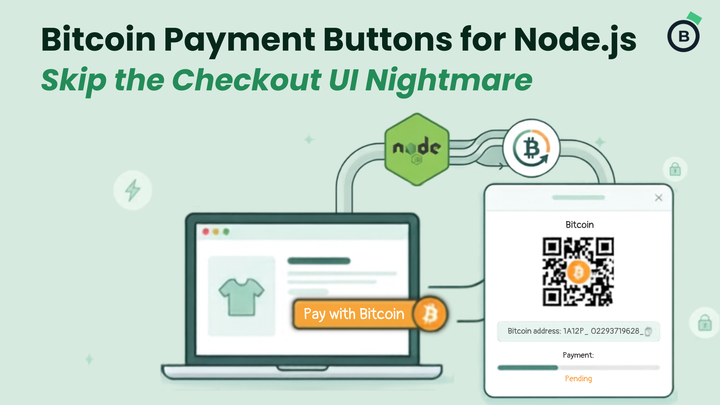
The Blockonomics API supports two integration paths: a native Payments API for full control, where merchants build their own UI and manage order logic, and a Payment Button/Checkout Widget for built-in UI with minimal coding. The API includes real-time price streams with quote locking to prevent losses due to volatility during the payment window.
Transaction monitoring includes WebSocket channels for real-time payment detection and callback notifications with automatic retry using exponential backoff. Addresses never expire—they are valid indefinitely, with time limits applying only to price lock-in, not address validity.
Privacy and Security Features
Blockonomics has become the go-to payment solution for VPN providers, privacy tools, and infrastructure companies. The platform generates a fresh Bitcoin address for each transaction, preventing easy linking of multiple payments to a single merchant account. No KYC documentation is required to start accepting payments—merchants do not need to upload passports or share home addresses.
The platform maintains a publicly available system status page for transparency, and its privacy-first architecture ensures that customer order information remains private to the merchant's shop and is never submitted to Blockonomics.
Pricing
Blockonomics charges a competitive 1% transaction fee. Critically, the first 20 transactions are completely free, allowing merchants to test the platform with zero financial commitment. There are no setup fees, no monthly charges, and no hidden costs. Because payments go directly to the merchant's wallet, there are no withdrawal fees or minimum withdrawal limits.
Ideal Use Cases
Blockonomics is the best choice for privacy-focused businesses, including VPN services, hosting providers, and digital product merchants. It excels for small to medium enterprises—92% of Blockonomics merchants have team sizes of 1-10 people, demonstrating the platform's accessibility for independent entrepreneurs. Web hosting represents the largest merchant category at 25%, followed by VPN and privacy services.
2. BTCPay Server: Maximum Control, Maximum Complexity
BTCPay Server is the gold standard for technical purists who want absolute control over their payment infrastructure. As an open-source, self-hosted payment processor, it offers zero platform fees and complete sovereignty—but at the cost of significant technical overhead.
BTCPay Server requires merchants to run their own Bitcoin node, manage server infrastructure, handle software updates, and troubleshoot issues independently. For highly technical operators, this is a feature. For most merchants, it is a barrier. Blockonomics provides roughly 95% of the sovereignty of BTCPay Server with about 10% of the maintenance—plus multi-asset flexibility. For most merchants, Blockonomics keeps Bitcoin payments simple, direct, and reliable while honoring Bitcoin's original promise.
BTCPay Server supports Bitcoin and Lightning Network natively, with plugin-based support for additional assets. It offers powerful integration plugins and APIs, and webhook and callback infrastructure. However, the platform requires ongoing server maintenance, security patching, and blockchain synchronization management.
The comparison between Blockonomics and BTCPay Server ultimately comes down to a trade-off between absolute control and practical usability. Blockonomics delivers the same non-custodial benefits without the technical burden.
3. BitPay: Enterprise Legacy with Custodial Drawbacks
BitPay is one of the oldest names in crypto payment processing, with a 14-year track record and broad merchant adoption. The platform offers a simple web-based application for accepting blockchain payments, POS-integration solutions, and comprehensive API access.
BitPay's API allows clients to create and manage invoices, issue refunds, manage bills, retrieve real-time rates, view merchant ledger entries, and manage payout groups. The platform supports over 100 cryptocurrencies and offers automatic fiat conversion options. Enterprise features include accounting integrations, detailed ledger exports, user privilege management, and two-factor authentication.
However, BitPay is fundamentally a custodial platform. The service holds merchant funds before initiating withdrawals, creating counterparty risk and potential withdrawal delays. BitPay's fee structure ranges from 1-2% per transaction, and the platform requires KYC verification, which can take days or weeks.
For businesses that prioritize brand recognition and enterprise compliance over sovereignty, BitPay remains a viable option. For merchants who want direct control of their funds without intermediary risk, Blockonomics offers a superior non-custodial alternative with lower effective costs and no KYC requirements.
4. Coinbase Commerce: Enterprise Trust, Custodial Control
Coinbase Commerce leverages the infrastructure of the largest US cryptocurrency exchange, offering enterprise-grade compliance with zero platform fees. The platform emphasizes simplicity and stability, with USDC settlement as the default.
Customers pay in hundreds of supported cryptocurrencies, with all payments automatically converted to USDC stablecoin for guaranteed settlement with no volatility exposure. Transactions on Base and Polygon networks confirm instantly, improving the customer experience. Coinbase Commerce charges no platform fees—merchants only pay blockchain network fees.
The platform's integration with Shopify represents a significant development in mainstream crypto adoption. In 2025, Shopify enabled USDC payments via Coinbase Commerce, layered on top of Base—a secure, low-fee Ethereum Layer 2 network. Coinbase also announced the Commerce Payments Protocol, bringing sophisticated multi-step payment flows such as escrow, authorizations, captures, and refunds onto the blockchain.
However, Coinbase Commerce is a custodial platform that holds merchant funds. While Coinbase's public company status and regulatory compliance provide a degree of institutional trust, the fundamental counterparty risk remains. Additionally, Coinbase Commerce requires KYC verification and is limited in its fiat currency support for invoicing compared to Blockonomics' 150+ fiat currency coverage.
5. NOWPayments: Broad Asset Support, Limited Fiat Coverage
NOWPayments has positioned itself as a broad-spectrum crypto payment processor, supporting over 300 cryptocurrencies across various chains for cross-chain payments. The platform supports popular coins including BTC, ETH, and LTC; stablecoins including USDT, USDC, and DAI; trending chains like Solana, Arbitrum, and Optimism; and privacy currencies like Monero, ZEN, and Dash.
NOWPayments offers a hybrid custody model—non-custodial by default with an optional custodial mode. The fee structure is 0.5% for same-currency payments and 1% for cross-currency payments requiring exchange. Forbes Advisor ranked NOWPayments as the #1 Cryptocurrency Payment Gateway of 2025, rating it 4.9/5.
However, NOWPayments has significant limitations in fiat currency support. The platform supports only approximately 25 fiat currencies for its on-ramp service. For merchants who need to invoice customers in their local currency across a truly global customer base, this narrow fiat coverage is a critical limitation. Blockonomics' 150+ fiat currency support provides substantially greater global reach for merchants operating across diverse markets.
Additionally, NOWPayments' fiat conversion features require KYC verification, undermining the privacy benefits that many crypto merchants value. Blockonomics maintains its no-KYC policy while still supporting comprehensive fiat currency invoicing.
6. CoinGate: European Regulatory Compliance
CoinGate is a regulated crypto payment gateway operating under the EU's MiCA licensing framework, with strict AML and KYC compliance requirements. The platform supports over 10 cryptocurrencies, including Bitcoin and USDC, with settlement options in EUR, USD, and stablecoins.
CoinGate's feature set includes instant crypto-to-fiat conversion at live market rates, built-in KYC and AML compliance tools, and comprehensive reporting and reconciliation capabilities. The platform supports API integration for payment processing, payouts, billing, and balance management, alongside no-code dashboard management and e-commerce plugins.
However, CoinGate's regulatory compliance comes with trade-offs. The platform mandates European merchant verification and requires KYC, which can delay onboarding and limit accessibility for privacy-conscious merchants. CoinGate's cryptocurrency support, at 10+ assets, is relatively limited compared to broader platforms, and the custodial nature of the service means merchants do not have direct control of their funds.
For European businesses that require MiCA-compliant payment processing with fiat settlement in EUR, CoinGate is a strong option. For merchants who prioritize direct fund control, privacy, and global fiat currency support, Blockonomics offers a more flexible and sovereign alternative.
7. OpenNode: Lightning-First Bitcoin Processing
OpenNode specializes in Bitcoin and Lightning Network payment processing, with features including payment templates for customizable payment requests and a lightweight POS system. The platform supports automatic currency conversion and bank transfer settlement options, with API-based integrations for SaaS teams.
OpenNode's API enables charge creation with customizable parameters including fiat currency specification, automatic fiat conversion, and configurable time-to-live settings. The platform signs all charge-related webhook events, allowing merchants to validate event authenticity.
However, OpenNode is a custodial platform that holds merchant funds, creating counterparty risk. The platform's focus is primarily on Bitcoin and Lightning Network, without the multicoin support that merchants increasingly require. For businesses that need both Bitcoin and stablecoin payment options with non-custodial settlement, Blockonomics provides a more comprehensive solution.
8. Stripe: The Mainstream Giant Entering Crypto
Stripe's entry into crypto payments represents a significant validation of the space. The company's 2026 Sessions announced multi-rail support including Brazilian Pix and US stablecoins, with Indian UPI in the pipeline. Stripe now supports global payouts to 160 countries and payments in over 135 currencies.
Stripe's partnership with Visa to launch stablecoin-linked card programs across 100+ countries and its collaboration with Meta to pay creators in USDC on Polygon and Solana demonstrate the company's commitment to crypto infrastructure.
However, Stripe's crypto offering is primarily focused on stablecoin payouts and on-ramp services rather than direct cryptocurrency payment acceptance. The platform operates in only 40+ countries for full merchant services, and it is fundamentally a custodial platform that holds and manages funds. For merchants who want to accept Bitcoin and other cryptocurrencies directly into their own wallets with full sovereignty, Stripe does not yet offer a non-custodial payment acceptance solution comparable to Blockonomics.
Holistic Comparison Table
| Feature | Blockonomics | BTCPay Server | BitPay | Coinbase Commerce | NOWPayments | CoinGate | OpenNode | Stripe |
|---|---|---|---|---|---|---|---|---|
| Custody Model | Non-Custodial | Non-Custodial | Custodial | Custodial | Hybrid | Custodial | Custodial | Custodial |
| Fiat Currencies Supported | 150+ | Unlimited (self-managed) | 40+ | Limited | ~25 | 3-5 | Limited | 135+ |
| Crypto Assets Supported | BTC, BCH, USDT | BTC, LN + plugins | 100+ | 100+ | 300+ | 10+ | BTC, LN | USDC (stablecoins) |
| KYC Required | No | No | Yes | Yes | For Fiat | Yes | Yes | Yes |
| Platform Fees | 1% | $0 | 1-2% | $0 | 0.5-1% | 1% | Variable | Variable |
| First Transactions Free | Yes (20) | N/A (always free) | No | N/A (always free) | No | No | No | No |
| Direct-to-Wallet | Yes | Yes | No | No | Optional | No | No | No |
| WooCommerce Plugin | Yes | Yes | Yes | Yes | Yes | Yes | No | No |
| WHMCS Plugin | Yes | Via plugin | Yes | No | Yes | Yes | No | No |
| API Playground | Yes | No | Limited | No | No | No | No | No |
| Test Environment | Yes | Yes | Yes | Yes | Yes | Yes | Yes | Yes |
| Privacy-First Architecture | Yes | Yes | No | No | Partial | No | No | No |
| Setup Time | Minutes | Hours/Days | Days | Days | Minutes | Days | Minutes | Days |
| Ideal For | All merchants wanting sovereignty | Technical purists | Enterprise with compliance needs | Mainstream brands | Altcoin-heavy merchants | EU regulated businesses | Lightning-focused businesses | Mainstream payouts |
The Blockonomics Advantage: A Deeper Analysis
1. Non-Custodial Multi-Asset Architecture: The Defining Differentiator
The most significant differentiator between Blockonomics and the majority of competing platforms is the non-custodial multi-asset architecture. While many payment processors offer multi-coin support, the vast majority function as centralized escrow services, holding merchant funds before initiating costly and often delayed withdrawals.
Blockonomics fundamentally rejects this model. Every payment—whether BTC, BCH, or USDT—is sent directly to the merchant's own designated wallet addresses. This eliminates the critical risk of counterparty failure where a centralized service might be hacked, shut down, or freeze funds. In a year where even trusted crypto platforms faced regulatory heat and liquidity questions, Blockonomics' direct-to-wallet model meant merchants had no withdrawal limits, no surprise account freezes, and no payout processing delays.
2. 150+ Fiat Currencies: True Global Reach
Blockonomics' support for 150+ fiat currencies is a critical advantage for merchants operating globally. Competitors vary dramatically in their fiat currency support. NOWPayments supports approximately 25 fiat currencies. CoinGate supports primarily EUR, USD, and GBP. BitPay and Coinbase Commerce offer limited fiat options.
Blockonomics enables merchants to invoice in any major fiat currency while receiving settlement in Bitcoin or USDT. This means a merchant in Vietnam can invoice a customer in Vietnamese Dong, a merchant in Kenya can invoice in Kenyan Shillings, and a merchant in Brazil can invoice in Brazilian Real—all while receiving payment in cryptocurrency. The dynamic price adjustment at the time of payment ensures accurate conversion regardless of market volatility.
This capability is particularly valuable for freelancers, contractors, and service-based businesses that work with international clients. The Blockonomics peer-to-peer invoicing service allows independent professionals to bill clients in their preferred fiat currency while receiving payment in Bitcoin, with the invoice encrypted in the browser for privacy.
3. Complete Merchant Tool Ecosystem
Blockonomics provides every tool a merchant needs, eliminating the need for multiple third-party services:
E-Commerce Plugins
The Blockonomics WooCommerce plugin, available from the WordPress Plugin directory, supports BTC, BCH, and USDT payments with seamless integration into existing WooCommerce stores. The plugin requires no API key approvals or documentation—installation takes approximately two minutes.
The WHMCS plugin, supporting USDT from version 2.0 onwards, enables hosting and service-based businesses to accept cryptocurrency payments within their existing billing infrastructure.
PrestaShop integration is available for European merchants, ensuring broad platform coverage.
API-First Architecture
Blockonomics is built API-first with clear documentation and simple integration steps. Merchants can generate an invoice with just a few lines of code. The API supports two integration paths: a native Payments API for full control, where merchants build their own UI and manage order logic, and a Payment Button/Checkout Widget for built-in UI with minimal coding.
The integrated API Playground allows developers to test every endpoint directly within the documentation page, viewing live JSON responses without external tools like Postman or cURL. This instant feedback loop drastically cuts down on troubleshooting time and eliminates common setup errors.
Transaction Management
The merchant dashboard provides unified wallet management across stores, transaction history exports in CSV and Excel formats with fiat value at transaction time, and real-time payment notifications via WebSocket. Callback notifications include automatic retry with exponential backoff, ensuring reliable delivery even during network disruptions.
4. Privacy as a Competitive Advantage
Privacy is not a niche concern for crypto merchants—it is a core business discipline. Publicly visible transactions allow competitors to infer pricing, best-selling products, and seasonal demand. Visible revenue flows make businesses targets for phishing, extortion, and account-targeted fraud.
Blockonomics positions itself as a privacy-first, noncustodial payments partner. The platform generates a fresh Bitcoin address for each transaction, preventing easy linking of multiple payments to a single merchant account. The platform requires no KYC documentation—no passport uploads, no utility bill scans, no home address verification.
Customer order information remains private to the merchant's shop and is never submitted to Blockonomics. There is no centralized database of transactions for hackers to target or governments to subpoena. This architecture represents true Web3 principles: financial data belongs to the merchant, not to a corporation or government.
This privacy-first approach has made Blockonomics the go-to payment solution for VPN providers, privacy tools, and infrastructure companies building the open internet. These businesses cannot use traditional payment processors without compromising their core value proposition. Blockonomics enables them to accept payments without sacrificing the privacy they promise their customers.
5. Community-Driven Development
In 2026, Blockonomics has embraced a community-driven development paradigm. This is not about having a Discord channel with muted notifications—it is a fundamental architectural and philosophical commitment to building with users, not just for them. The platform's roadmap is shaped by the actual needs of its merchant base, resulting in features that solve real business problems rather than chasing industry trends.
The launch of USDT support on Ethereum ERC-20 exemplifies this approach. Blockonomics chose Ethereum not because of blockchain tribalism but because merchant feedback indicated that corporate wallets support Ethereum, accounting software recognizes ERC-20 tokens, and treasury departments trust the network. This user-driven decision-making ensures that every feature investment delivers tangible merchant value.
Integration Tools and Developer Resources
Blockonomics provides a comprehensive set of integration tools designed to minimize development time and maximize reliability:
REST API
The Blockonomics REST API enables programmatic access to all payment functions. Developers can create and monitor payment invoices, track payment status via webhooks, support HD (Hierarchical Deterministic) wallets, and attach transaction-level metadata including custom order IDs.
The API includes real-time price streams with quote locking to prevent losses due to volatility during the payment window. Addresses are generated unique to each transaction and never expire, providing maximum flexibility for merchants.
WebSocket Monitoring
Blockonomics provides WebSocket channels for real-time payment detection. The platform monitors blockchain transactions and pushes updates to the merchant's application the moment an unconfirmed payment is detected, enabling immediate order processing without requiring the customer to remain on the checkout page.
Callback Infrastructure
The platform's callback system posts notifications to the merchant's server once transactions are confirmed. Callbacks include status codes (0 for unconfirmed, 2 for confirmed), the payment address, amount in satoshis, transaction ID, and RBF flag where applicable. Failed callbacks are automatically retried with exponential backoff, and merchants can secure their callback URLs using a secret parameter.
Test Bench
Blockonomics provides a dedicated Test Bench where developers can simulate transactions without risking real Bitcoin. The test environment supports generating new addresses, triggering test unconfirmed, partially confirmed, and confirmed states, and observing exactly how webhook handlers behave in each scenario.
E-Commerce Plugins
The WooCommerce plugin supports BTC, BCH, and USDT payments with test mode support for simulated test payments, faster checkout page loading via parallel API calls, and payment logs accessible under WooCommerce Status > Logs. The WHMCS plugin enables cryptocurrency payment acceptance within hosting and service billing workflows. PrestaShop integration is available for European merchants.
Security Architecture: Why Non-Custodial Matters
The distinction between custodial and non-custodial payment processing is not merely philosophical—it has profound practical implications for merchant security and business continuity.
In a custodial model, the payment processor holds merchant funds in its own wallets. This creates multiple risks: the processor could be hacked, as has happened to numerous exchanges and platforms throughout crypto history. The processor could become insolvent, leaving merchants as unsecured creditors in bankruptcy proceedings. The processor could freeze accounts arbitrarily, disrupting merchant cash flow. The processor could impose withdrawal limits or delays, preventing merchants from accessing their own revenue.
Blockonomics eliminates all of these risks through its direct-to-wallet architecture. The platform never holds merchant funds—not for a second, not for security purposes, not for compliance. When a customer pays via Blockonomics, the Bitcoin or USDT goes straight from their wallet to the merchant's wallet. Blockonomics is the GPS, not the driver.
This architectural choice also provides legal and regulatory advantages. Because Blockonomics never holds funds, it is not a money transmitter in the traditional sense. This means no mandatory KYC requirements, no passport uploads, and no utility bill scans. For merchants operating in jurisdictions with strict financial regulations, this can significantly reduce compliance burden and legal exposure.
Merchant Profiles: Who Uses Blockonomics and Why
Blockonomics has cultivated a diverse merchant base united by a common appreciation for sovereignty, privacy, and operational simplicity.
VPN and Privacy Services
VPN providers and privacy services represent Blockonomics' largest and most significant merchant category. These businesses cannot use traditional payment processors without compromising their core value proposition—providing privacy to their customers. Blockonomics enables them to accept payments without collecting customer data, maintaining the privacy promise that defines their businesses.
Web Hosting Providers
Web hosting represents 25% of the total Blockonomics merchant space, the largest single industry category. Hosting providers value Blockonomics' WHMCS integration, which enables seamless cryptocurrency payment acceptance within existing billing workflows, and the platform's support for recurring-style payment management.
Digital Product Merchants
Sellers of game keys, software licenses, and digital downloads benefit from Blockonomics' instant settlement and no-chargeback characteristics. Crypto transactions are irreversible, eliminating the fraud risk that plagues digital product merchants using traditional payment methods.
Independent Entrepreneurs and SMEs
A staggering 92% of Blockonomics merchants have team sizes ranging from 1-10 people, demonstrating the platform's accessibility for independent entrepreneurs and small to medium-sized enterprises. These merchants value the platform's minimal setup requirements, no-KYC onboarding, and transparent fee structure.
Freelancers and Contractors
The peer-to-peer invoicing service enables freelancers to bill international clients in their preferred fiat currency while receiving payment in Bitcoin. This capability is particularly valuable for professionals working across borders who want to avoid traditional banking fees and currency conversion costs.
Market Context: The Crypto Payment Landscape in 2026
Understanding the broader market context helps merchants appreciate why the choice of payment API matters more than ever.
The crypto payment gateway market grew from $1.69 billion in 2024 to $2.02 billion in 2025, representing a 19.5% CAGR. The Bitcoin payment ecosystem market is projected to grow from $1.8 billion in 2025 to $8.9 billion by 2034 at a 19.4% CAGR.
Digital wallets now dominate global commerce, accounting for more than half of online transactions and one-third of offline transactions. These wallets can flexibly integrate cryptocurrencies as payment methods, positioning crypto for mainstream adoption.
Cryptocurrencies are projected to be the fastest-growing online payment method, with a 16% CAGR through 2030, reaching $31 billion in e-commerce value. Despite this growth trajectory, only 10% of merchants globally accept crypto payments directly, and crypto represents just 0.19% of global e-commerce transaction volume.
This gap between consumer adoption and merchant acceptance represents one of the largest untapped opportunities in digital commerce. Merchants who integrate crypto payments today are positioning themselves to capture this growing market before their competitors.
The Future of Crypto Payments: Trends and Predictions
Several emerging trends will shape the crypto payment landscape through the remainder of 2026 and beyond:
Stablecoin Dominance
Stablecoins are becoming the preferred settlement currency for commercial transactions, offering the benefits of blockchain settlement without the volatility of traditional cryptocurrencies. Blockonomics' early integration of USDT positions the platform to benefit from this trend, and the platform's modular design enables easy addition of new stablecoins as they gain traction.
Regulatory Evolution
The regulatory landscape for crypto payments continues to evolve, with frameworks like the EU's MiCA regulation establishing clear compliance requirements. Blockonomics' non-custodial architecture provides inherent regulatory advantages, as the platform's lack of fund custody simplifies compliance obligations for both the platform and its merchants.
AI and Automation
The integration of AI agents with payment infrastructure represents a frontier development. Coinbase has announced plans to integrate agentic commerce, enabling AI agents to initiate purchases and manage crypto wallets. As this technology matures, API-first platforms like Blockonomics that provide comprehensive programmatic access will be well-positioned to support AI-driven commerce workflows.
Cross-Border Commerce
Cryptocurrency payments are increasingly recognized as a superior solution for cross-border transactions, eliminating the friction, delays, and costs associated with traditional correspondent banking. Blockonomics' 150+ fiat currency support positions the platform to capitalize on the growing demand for borderless payment solutions.
Why Blockonomics Is the Best Choice for Merchants in 2026
After examining the competitive landscape comprehensively, Blockonomics emerges as the superior choice for merchants who value sovereignty, privacy, global reach, and operational simplicity.
Sovereignty Without Sacrifice
Blockonomics provides roughly 95% of the sovereignty of self-hosted solutions like BTCPay Server with approximately 10% of the maintenance burden. Merchants get direct-to-wallet settlement, full private key control, and zero counterparty risk—without the need to run servers, manage nodes, or troubleshoot technical issues.
True Global Reach
With 150+ fiat currencies supported for invoicing, Blockonomics enables merchants to serve customers in virtually any market. This far exceeds the fiat currency coverage of competitors like NOWPayments (approximately 25 currencies) and CoinGate (3-5 currencies). For businesses operating globally, this capability is not merely convenient—it is essential.
Privacy by Design
Blockonomics is one of the only payment APIs that requires no KYC documentation, collects minimal merchant data, and keeps customer order information private to the merchant's own systems. This privacy-first architecture is not a marketing claim—it is built into the platform's technical design, from per-invoice address generation to the absence of centralized transaction databases.
Complete Merchant Tool Suite
From WooCommerce and WHMCS plugins to a comprehensive REST API with integrated testing tools, Blockonomics provides everything merchants need to accept cryptocurrency payments without requiring additional third-party services. The platform's community-driven development ensures that new features address real merchant needs.
Proven Track Record
Blockonomics processed 350,000 transactions in 2025 without ever touching a single private key, proving that non-custodial commerce is not merely an ideal—it is a scalable business model. The platform has been operating since 2015, surviving and thriving through multiple crypto market cycles while maintaining unwavering commitment to its founding principles.
Competitive Economics
With a 1% transaction fee and the first 20 transactions free, Blockonomics offers competitive pricing without the hidden costs of withdrawal fees, minimum balance requirements, or account maintenance charges. Because funds go directly to the merchant's wallet, there are no additional costs to access revenue.
Conclusion: Making the Right Choice for Your Business
The Bitcoin payment API landscape in 2026 offers diverse options spanning the spectrum from fully custodial enterprise platforms to self-hosted open-source solutions. The right choice depends on a merchant's specific priorities: technical capability, regulatory requirements, privacy concerns, global reach, and desire for fund sovereignty.
For merchants who want direct control of their funds without the technical burden of self-hosting, Blockonomics represents the optimal balance. It combines non-custodial security with user-friendly integration, comprehensive fiat currency support with privacy-first architecture, and competitive pricing with a complete merchant tool ecosystem.
The crypto payment revolution is accelerating. Digital wallets dominate global commerce. Cryptocurrencies are the fastest-growing payment method. And yet, only 10% of merchants have integrated crypto payment acceptance. The opportunity is enormous, and the infrastructure is ready.
For businesses ready to capture this opportunity while maintaining full control of their funds, their data, and their customer relationships, Blockonomics provides the most complete, privacy-respecting, and globally accessible Bitcoin payment API available in 2026.